
News
The High Cost of Fixing a Low Credit Score
Most financial advisors will tell you that a bad credit score is a permanent stain on your reputation that takes years of disciplined saving to erase. They’re wrong. While rebuilding credit does take time, waiting until your score is “perfect” to access capital is a recipe for disaster when real-life emergencies actually hit.
The idea that you have to be a paragon of fiscal responsibility to access liquidity is a myth that keeps people stuck in high-interest debt cycles. People need money when things are going wrong, medical bills, car repairs, or unexpected job shifts, not when their credit report is pristine. Ignoring the reality of sub-580 scores doesn’t make the bills go away.
The market has actually adapted to this. There is a massive, functioning ecosystem of lenders designed specifically for people who have tripped up. You don’t need a perfect score to find a way forward, but you do need to understand how these specific products work so you don’t end up in a debt trap.
It’s not about finding the cheapest loan in the world; it’s about finding the most effective tool for your specific crisis. Sometimes, a high-interest loan that solves a problem today is better than a low-interest loan you’ll never qualify for.
Why the “Wait and See” Approach Fails
Financial planners often suggest that if you have bad credit, you should stop borrowing entirely and focus on rebuilding. This is sound advice if you have a mortgage to pay, but it’s terrible advice for someone facing a $3,000 transmission failure. If you can’t fix the car, you can’t get to work. If you can’t get to work, you can’t pay down the debt.
The “wait and see” method creates a vacuum. In that vacuum, people often turn to payday lenders. These are the predators of the financial world. They offer small amounts of cash with interest rates that can exceed 400% annually. It is a desperate move that guarantees a downward spiral. Using a personal loan with bad credit is often a way to avoid that payday lender trap.
Consider Marcus, a freelance graphic designer who faced a sudden $4,500 dental emergency in late 2023. His score had dipped to 540 after a period of medical debt. He couldn’t wait eighteen months for his score to recover to 650. He needed the cash immediately to prevent the infection from getting worse. He opted for an unsecured loan that, while expensive, had a fixed repayment term. He paid it off in 14 months and actually improved his score in the process.
This shows why specialized lending matters. When used as a bridge, these loans are tools. When used to fund lifestyle creep, they are weights. The difference depends entirely on the borrower’s intent and the structure of the loan.
The Landscape of Sub-580 Lending Options
The lending market isn’t a monolith. If you have a score below 580, you’re essentially entering a different category of consumer finance. Most traditional banks will look at your application and immediately decline it without a second thought. This isn’t personal; it’s just how their automated risk models work.
However, alternative lenders have carved out a niche. These companies often look at more than just the three-digit FICO score. They might look at your bank account activity, your consistent income, or your employment history. This is where the real work of comparing options begins. You can’t just take the first offer you see in a pop-up ad.
According to LendingTree, many lenders now offer options for scores under 580, including specific providers that have no minimum score requirement at all. This is a big shift from a decade ago. The modern economy requires more flexibility than old-school banking models allow.
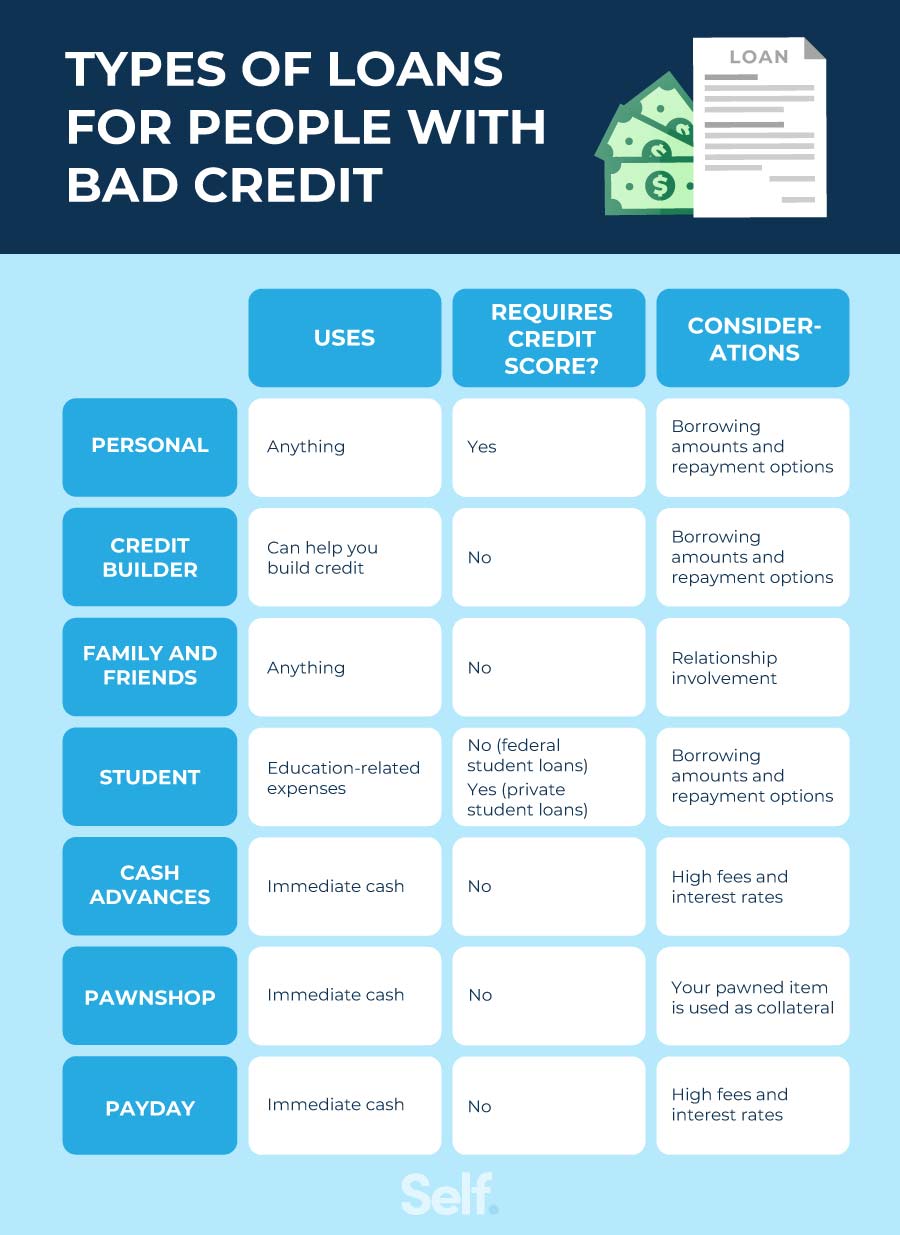
When you look at these options, you’ll notice several different types of products. You need to know which one you’re looking at before you sign anything. Here is a quick breakdown of the common types:
- Unsecured Personal Loans: These don’t require collateral like a house or a car. They’re based solely on your promise to pay. They’re easier to get but carry higher interest rates.
- Secured Personal Loans: You put up something of value (like a savings account) as collateral. If you don’t pay, they take the collateral. This is easier to qualify for but carries more risk for you.
- Co-signed Loans: You find someone with good credit to sign with you. They become legally responsible if you fail to pay. This is a massive favor that can ruin friendships if handled poorly.
Before you commit to any high-interest product, check your options through a service like CashNow Advance Online to see what your immediate liquidity looks like without committing to a long-term debt structure. It helps to see the full picture of your monthly obligations before adding a new one.
Comparing the Actual Terms You’ll Encounter
You’ll see a lot of marketing that promises “easy cash” or “instant approval.” Don’t let it fool you. The reality of bad credit lending is in the fine print. You aren’t just looking at the monthly payment; you’re looking at the APR, the origination fees, and the prepayment penalties.
An APR (Annual Percentage Rate) is different from a simple interest rate. It includes the interest plus any fees the lender charges to process the loan. If a lender says the rate is 15% but they charge a 5% origination fee, your actual cost of borrowing is much higher. This is how people get caught off guard by the “hidden” costs of quick money.
To navigate this, look at how different services approach the problem. Based on research from BadCredit.org, experts often rank services based on three main pillars: interest rates, reputation, and loan terms. A lender might have a great interest rate but a terrible reputation for customer service, or a great reputation but terms that are way too long.
| Feature to Check | Why It Matters | Red Flag |
|---|---|---|
| Origination Fee | Reduces the actual amount you receive in your bank account. | Fees exceeding 10% of the total loan. |
| Prepayment Penalty | Determines if you can pay the loan off early without a fee. | Lenders that charge you for being responsible. |
| Fixed vs. Variable Rate | Determines if your payment stays the same or goes up. | Variable rates in a high-inflation environment. |
| Repayment Term | The length of time you are in debt. | Terms longer than 36 months for small amounts. |
If you are looking for something specific, Acorn Finance allows you to compare personalized rates from top lenders in minutes, which is helpful because it doesn’t impact your credit score to check. This “soft pull” is essential for anyone trying to shop around without further damaging their standing.
The Hidden Benefit of Controlled Debt
It sounds counterintuitive, but if you do it correctly, a personal loan can actually help repair your credit. This is the part most people miss. Credit scores are based on how you manage debt. If you have a high credit card balance, your “utilization” is high, which hurts your score. If you take out a personal loan to pay off that card, your utilization drops instantly.
This is called “credit card consolidation.” You move high-interest, revolving debt into a fixed-term installment loan. This can create a sudden, significant jump in your score. However, there is a catch. If you use the freed-up space on your credit cards to go on a shopping spree, you have effectively doubled your debt. You have essentially burned your house down to keep yourself warm for one night.
The goal is to use the loan to clean up the mess, not to create a new one. When you make on-time payments on a personal loan, it reports to the credit bureaus as a successful installment loan. This builds a positive history of managing debt, which is exactly what the scoring models want to see. It’s a delicate balancing act, but it’s a proven method for rebuilding from a low starting point.
I once knew a woman who used a $5,000 personal loan to consolidate four different high-interest medical bills and one predatory credit card. She was terrified of the monthly payment, but she stuck to a strict budget (mostly just eating more home-cooked beans and rice for a few months) and paid it off in eighteen months. By the time she was done, her score had climbed 65 points, allowing her to refinance her car at a much lower rate.
Avoiding the Trap of “Too Good to Be True”
The most dangerous part of the bad credit loan market isn’t the high interest rates; it’s the scammers. Because they know people are desperate, scammers are incredibly active in this space. If a lender tells you that you are “guaranteed” approval regardless of your history, walk away immediately. No legitimate lender operates this way. If they aren’t checking your ability to repay, they are setting you up to fail.
A legitimate lender will always ask for proof of income and will always perform a credit check, even if it is a “soft” check first. They will also provide a clear, written contract that outlines every single fee. If they ask you to pay an “upfront fee” or “insurance fee” before you receive your funds, it is a scam. You should never have to pay money to get money.
Use reputable aggregators and comparison tools instead of clicking on random social media ads. Websites like Forbes Advisor provide extensive research into which lenders are actually legitimate and which ones are just playing with your emotions. The goal is to find a partner in your financial recovery, not an enemy in disguise.
If you find yourself looking at a loan offer and your gut tells you it’s too easy, trust that instinct. The “easy” money is almost always the most expensive or the most dangerous. Real financial progress is often boring, slow, and requires a bit of grit to maintain.
Always read the full Truth in Lending Act (TILA) disclosure before signing, specifically looking for the total amount you will have paid back by the end of the loan term.